

Deconstructing Curry
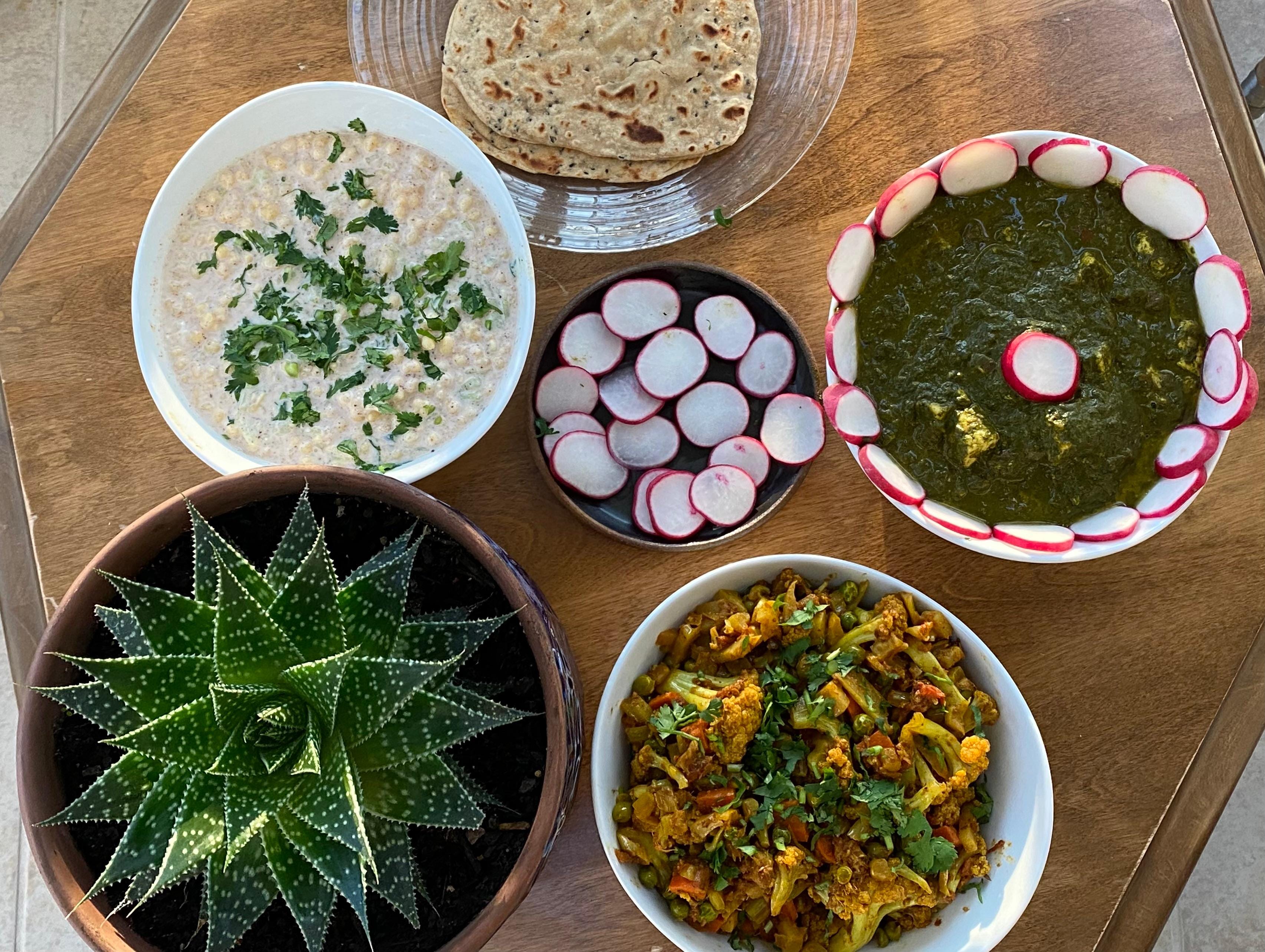
And Palak Paneer, a delicately spiced silken spinach curry with paneer

We, the inhabitants of God’s green earth, are prone to stereotypes. One of them is that Indian food = curry. And that “curry” is a particular dish with a specific recipe. Apart from the Indian connection, saucy and stewy dishes from Vietnam, Thailand, Cambodia, Indonesia, Pakistan, Sri Lanka and Caribbean countries like Jamaica, Trinidad, Guyana, and Barbados are called curries too. What is a curry and what is the deal with its confused provenance?
Curry is a dry or a saucy dish of vegetables and meat that is seasoned with spices. Lizzie Collingham writes in her richly detailed book, Curry: A Tale of Cooks and Conquerors, that the British learned the word “curry” from the Portuguese who adapted it from south Indian languages, Tamil, Malayalam and Kannada, and words like “kari’” and “karil.” Both these words have multiple meanings like spices for seasoning as well as cooked and spiced vegetables and meat. No one can pinpoint when “kari and “karil” became “curry” and the British started using it as a generic term for a spiced stew of vegetables and meat and eventually for Indian dishes in general.
Troubled provenance
The word “curry”, deeply associated with India’s colonial past, infuriates food writers like Madhur Jaffrey because it flattens the richly nuanced and mind-blowingly diverse cuisine into a single concept. Here’s what MJ proclaims in An Invitation to Indian Cooking “To me the word ‘curry’ is as degrading to India’s great cuisine as the term ‘chopsuey’ was to China’s…… ‘Curry’ is a just a vague, inaccurate word which the world has picked up from the British, who, in turn, got it mistakenly from us. It seems to mean different things to different people. Sometimes it is used synonymously with all Indian food. In America it can mean either Indian food or curry powder.”
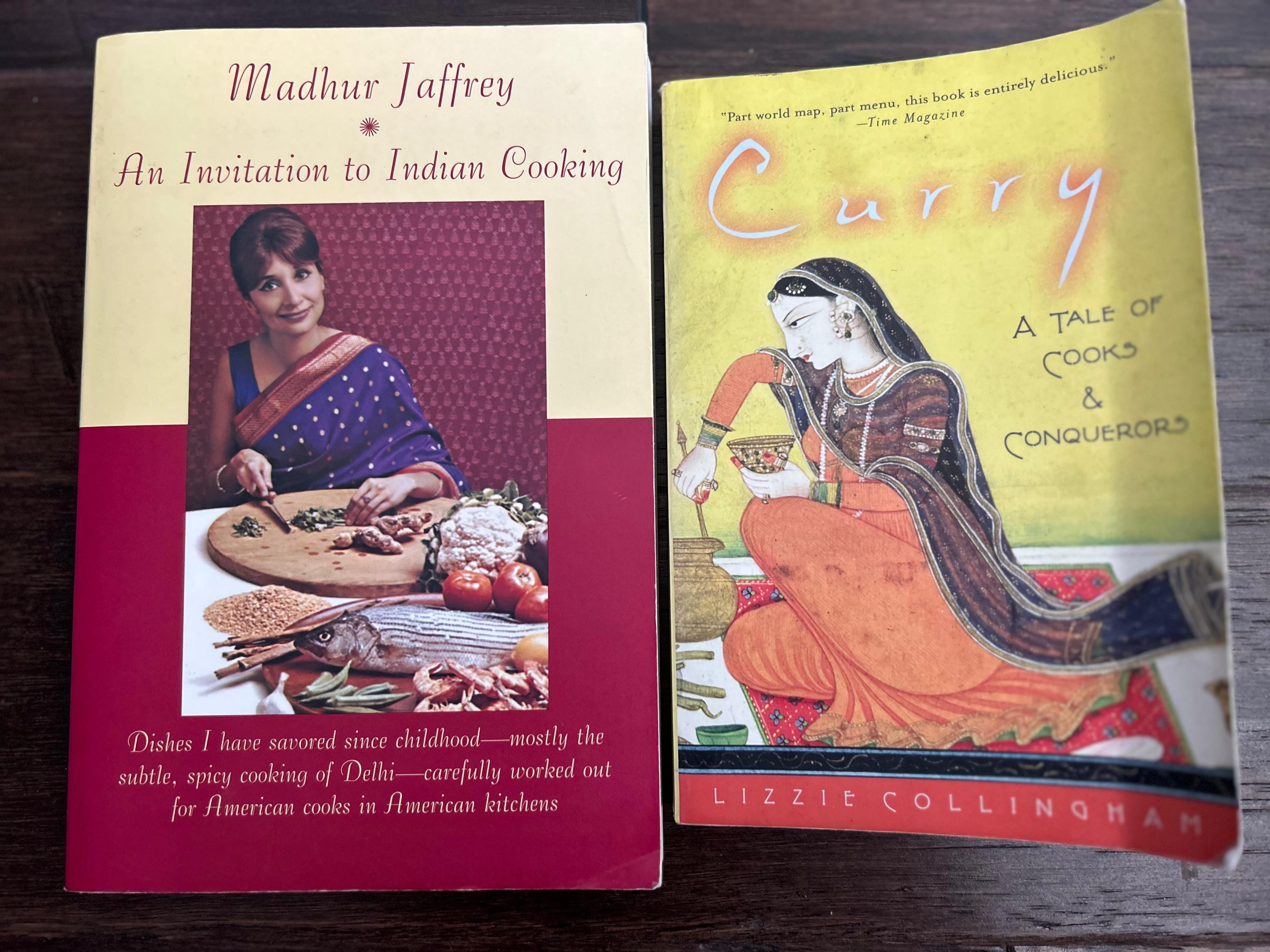
Lizzie Collingham declares in the same book, “No Indian would have referred to his or her food as a curry. The idea of a curry is, in fact, a concept that the Europeans imposed on India’s food culture. Indians referred to their different dishes by specific names and their servants would have served the British with dishes that they called, for example, rogan josh, dopiaza or quarama. But the British lumped all these together under the heading of curry.”
Painting broad strokes with a wider brush
This lumping was a boon as well as a curse. Curse because it glossed over the regional differences and compressed the staggering heterogeneity and diversity of Indian cooking into a simplistic concept and boon because a simple, adaptable idea could emerge out of the loose understanding of the cuisine’s infinite nuances, differences and subtleties. Curry was catch-all for pan-Indian cuisine and because it ignored the variety and differences in the country’s cuisine, it was an idea open to limitless interpretation and wide variations.
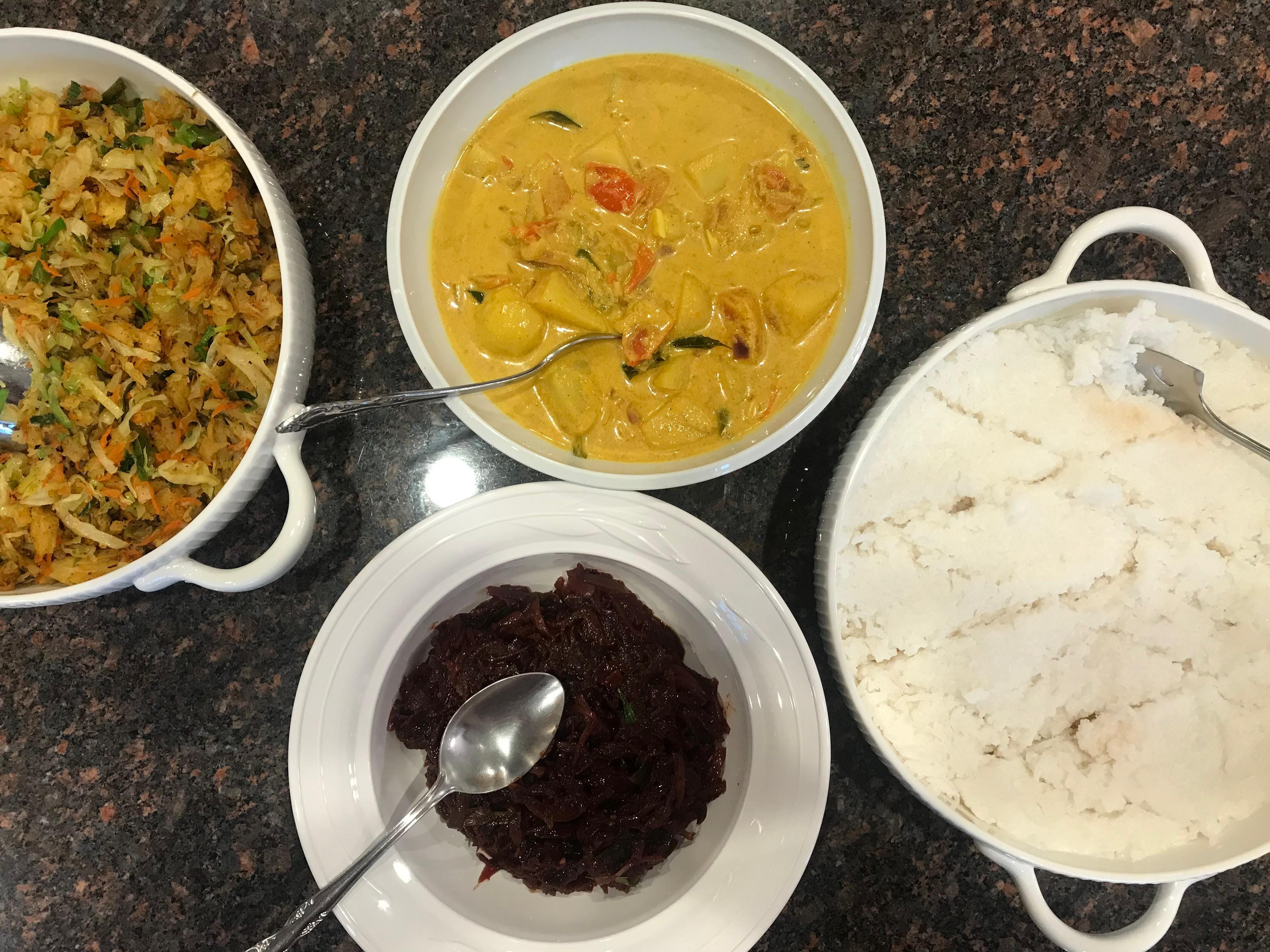
The flattening of Indian cuisine into a monolithic concept had some interesting repercussions. As the British spread their imperialist tentacles to other parts of the world, they took “curries” to South Africa, Caribbean, East Africa, Japan and other parts of Asia. So we have the delectable Thai curries, Bunny chow in South Africa, rendang in Indonesia as well as Japanese curries.
Add curry powder to the confusion
Where does curry powder fit into all this? What is curry powder? MJ reserves her most scathing remarks for curry powder, “If curry is an oversimplified name for an ancient cuisine, then ‘curry powder’ attempts to oversimplify (and destroy) the cuisine itself.” (On a side note, this feistiness dripping in her first book is absolutely delightful.)
I had a spice poster at home, which explains curry powder as “a westernized spice blend that captures the essence of India’s cuisines.” This explanation says a lot. Curry powder was an attempt by the British to capture all the Indian cuisines into a bottle, a pan-India spice mix. I say this because the number of spices in curry powder is extensive, way more than other common Indian spice mixes.
Curry Powder is a pan-India thing
Garam masala is the spice mix of North India, Sambhar Masala that of South India and Panch Phoran is from East India.
Garam Masala: Cumin seeds, Coriander seeds, cardamom, cinnamon, black peppercorns, cloves (An Invitation to Indian Cooking, Madhur Jaffrey)
Sambhar Masala: Dry Cayenne chile peppers, yellow split peas, coriander seeds, cumin seeds, fenugreek seeds, mustard seeds, poppy seeds, curry leaves, cinnamon (Raghavan Iyer’s 660 curries)
Panch Phoran: fennel seeds, cumin seeds, fenugreek seeds, nigella seeds, mustard seeds (Raghavan Iyer’s 660 curries)
Curry Powder: Cloves, black peppercorns, fennel seeds, cinnamon, cumin seeds, fenugreek seeds, dry ginger, dry red chile peppers, coriander seeds, bay leaf, turmeric, mustard seeds, green cardamom, star anise (Indianhealthyrecipes.com)
As you can see from the sheer number of spices in the mix, curry powder is an amalgamation of spices across the country and some more. By the end of 18th century, the British had already been in India for more than 100 years and were squarely addicted to Indian curries. They needed their curry fix at home too, so Indian traders concocted a mix of pan-Indian spices that reminded the British of the food they consumed throughout their colony. It is also important to remember that when Indian cooks prepared food for their British employers, they were already toned-down versions of what they themselves ate in terms of heat and spice. So it is not a surprise that curry powder, crafted especially for their employers, differed in its ingredients from homegrown spice mixes.
In conclusion, “curry” is an ambiguously flexible word. It allowed for the concept of a spiced, saucy or dry meaty and/or vegetable dish to migrate to other parts of the world and combine the concept with local ingredients to result in delicious dishes like Thai curries, Indonesian rendangs, South African bunny chow and Caribbean curries. And that is a win for food lovers like us.
Recipe - Palak Paneer
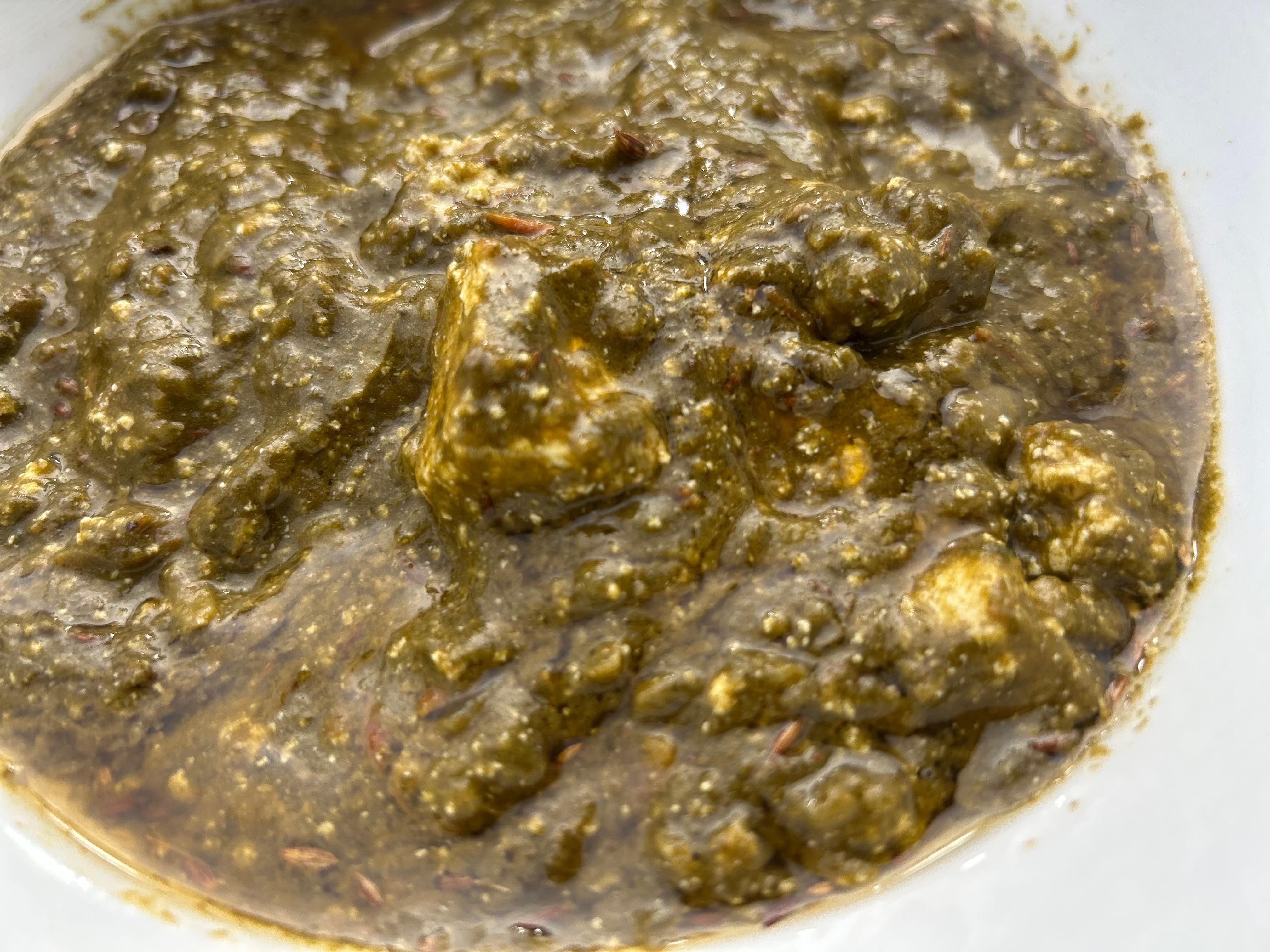
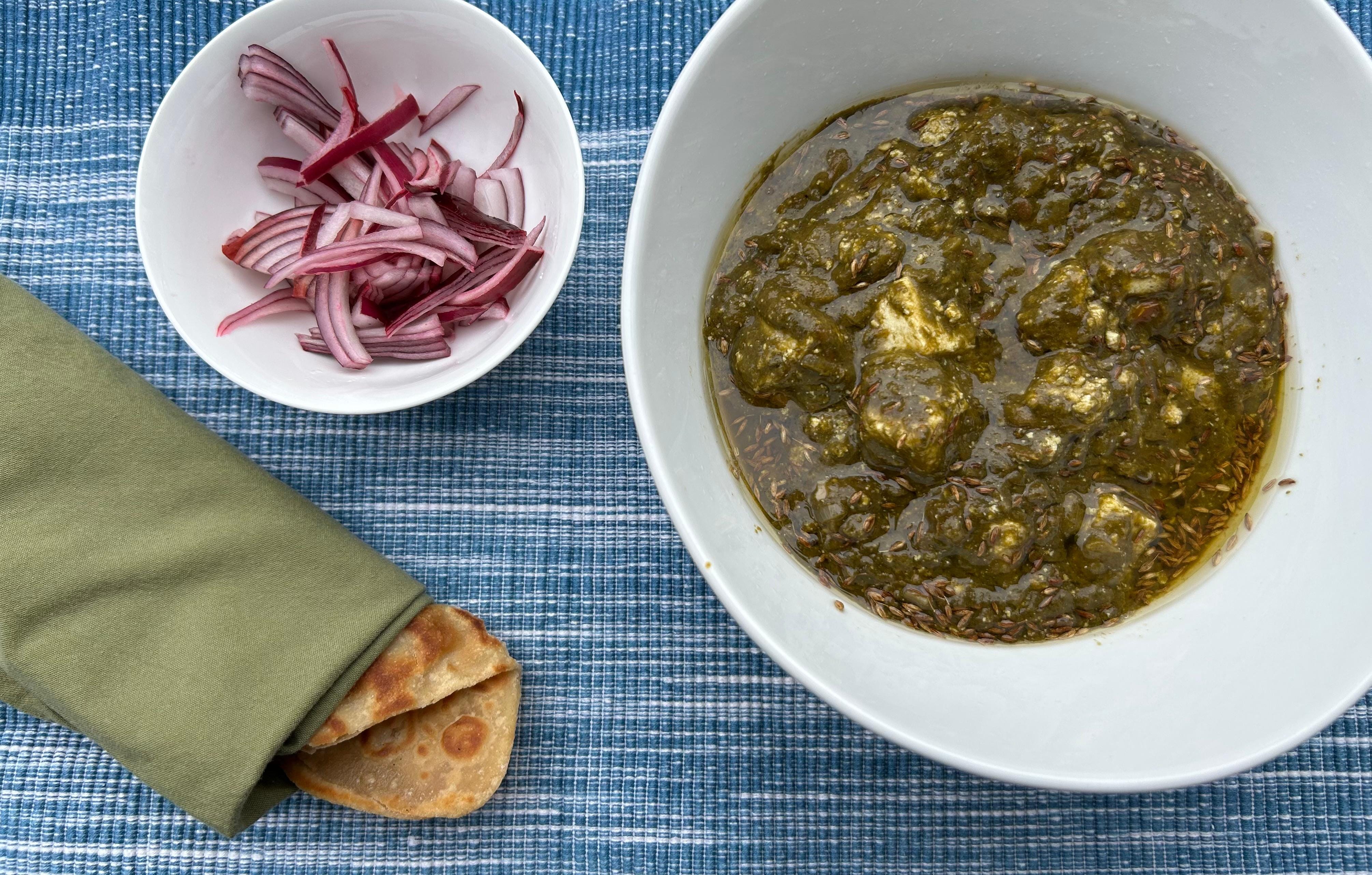
Palak means spinach and paneer is, well, paneer, an Indian cheese that does not melt when heated or grilled. Palak Paneer is a North Indian curry in which paneer pieces laze in a silky smooth delicately spiced spinach puree. It is one of most ordered dishes in Indian restaurants and pairs well with warmed up paratha, naan (no, no, don’t think naan bread), pita or rice.
Ingredients
4 tablespoons vegetable oil divided
8 oz. bag of fresh spinach or 8 cups loosely packed spinach leaves
6-8 oz. paneer (Indian grocery stores sell paneer in 12 to 14 oz. slabs) cut into pieces 1” x 1/2”
OR 8 oz tofu cut into pieces 1” x 1/2” (if you are vegan)
1 cardamom peeled
5-6 black peppercorns
2 cloves
3/4 cup diced red onions, about ½” pieces
2 medium garlic cloves, peeled and crushed
1 tablespoon ginger, peeled and grated
1 cup diced tomatoes, about 1” pieces
4 teaspoons tomato sauce
1 Thai chile diced (optional)
1 teaspoon garam masala
1 teaspoon salt
Pinch of sugar
Serves 3-4
Method
Pour 1 tablespoon oil in a thick-bottomed pan and turn the heat to medium. Pour spinach in the pan. Within a few minutes spinach will wilt down. Sauté to avoid spinach sticking to the pan and turn the heat off after 10 minutes. Once the spinach cools down, blend to a puree.


Take 2 cups hot water in a bowl and add paneer pieces to it. Cover. Please note that store-bought paneer works very well. Even in India, it’s common to buy it. I particularly like the Sach brand sold here in the US; it comes rather close to the homemade one. No need for any prep for tofu.
And here’s the super interesting part. Whenever I have made this dish with tofu instead of paneer, considering their vastly different profile, I have NOT missed paneer. Tofu blends effortlessly with spinach.
Roughly crush 5-6 peppercorns, seeds of 1 cardamom and 2 cloves in a mortar and pestle. Save the cardamom skin for chai.
Wipe the pan you used for spinach and heat 3 tablespoons oil. Add 3/4 cup onions and stir till they get a brownish tinge on medium heat. Add 1 tablespoon grated ginger, 2 crushed garlic cloves and sliced thai chile pepper. Cook for 2 to 3 minutes, until fragrant.
Pour 1 cup chopped tomatoes followed by pinch of sugar. Once the tomatoes break down, add 4 teaspoons tomato sauce and spice mix of peppercorns, cardamom and cloves. Stir intermittently till the onion/tomato mixture starts secreting oil, about 9-10 minutes.
Pour in the blended spinach puree. Add salt and ½ cup water to adjust consistency. You can add a little bit more too, if you don’t want the final product to be pasty. Cook on medium heat for about 7-8 minutes till you see thick bubbles erupt and splatter the spinach outside.
Uncover the bowl containing paneer, drain the paneer and discard the water. Gently drop paneer pieces. Let the paneer soak in the flavors and spices of the spinach puree for about 10 minutes at low heat.
Add 1 teaspoon garam masala. Stir well and turn the heat off.
Eat with naan or take it for lunch next day layered over rice (feel free to thin it out with little bit of water the next day). Ideally Palak paneer should be made a day in advance for the spices and seasonings to interact, do their dance and put on their best.
Here’s a trick I employ to break down this recipe into 3 parts
a) Sauté and puree the spinach - Day 1
b) Prepare the onion tomato base - Day 2
c) Soften the paneer and put the dish together - Day 3
d) Heat the palak paneer and serve - Day 4
An idea for the next post is playing in my head - Dal Chawal II. Spinach Dal, though I am in two minds about which lentil to write about, pigeon peas or split yellow moong dal. What do you think?
References
Collingham, L. (2006). Curry: A Tale of Cooks and Conquerors. New York: Oxford
Jaffrey, M. (1973). An Invitation to Indian Cooking. New York: Alfred A. Knopf
Did I ever tell you my very favourite Indian curry is palak paneer, mind you malai kofka, Rajma masala and dal Makani sit at a close second favourite. Oh how to choose?
You recipe looks great Annada, I think it will be very popular on Curry Night.
I just bought paneer yesterday, unsure if I could find a palak paneer recipe for it. Serendipity! Just have to buy or find an easy recipe for garlic naan. Thank you, can't wait to try your recipe.